
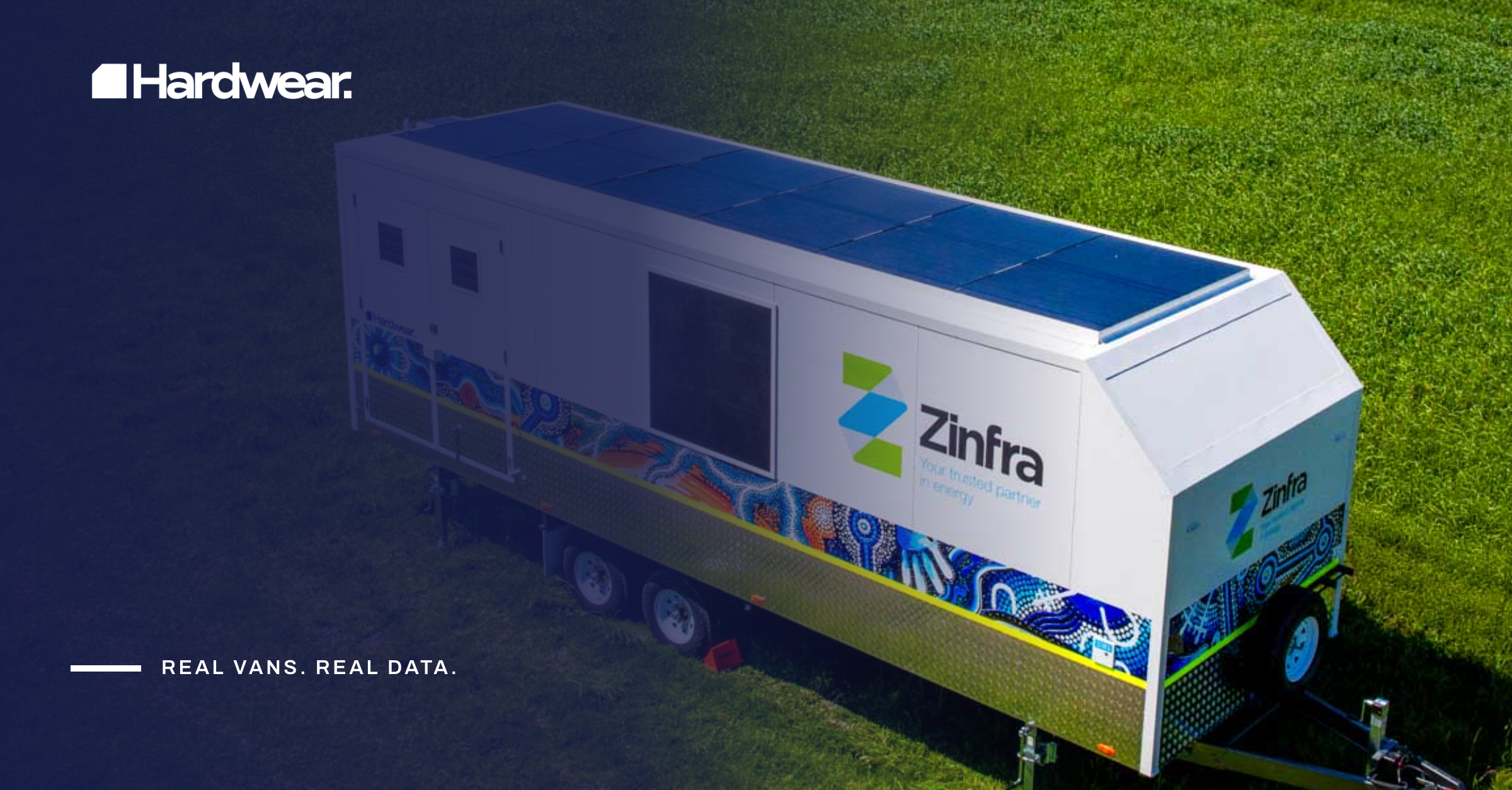
Built with Purpose. Backed by Data.
96% solar. Around 12 hours of generator runtime in 61 days. And the potential to save more than $215,000 over five years.
At Hardwear, we know what goes into our vans. And thanks to the technology built into them, we can see exactly how they perform once they're out working in the field.
Every Hardwear van is equipped with technology that provides real-time monitoring and reporting across its key power systems, including solar generation, battery performance and generator usage.
This gives us access to actual operating data - not just projected performance figures - and allows us to measure how the complete power system performs under real working conditions.
Over August and September 2026, we examined the operating data from Hardwear van HW26012C across a 61-day period.
The results demonstrate what a properly integrated solar, battery and generator system can achieve.
96% Solar. Just 12 Hours of Generator Runtime.
Across the 61-day monitoring period, the van recorded:
96% solar contribution (reported system figure)
Approximately 12 hours of generator runtime
Generator operation on just 5 of 61 days
8 individual generator runs, supplying a combined 20.8 kWh
Each generator run lasted approximately 1-2 hours, with the majority occurring during early morning periods.
The generator remained available throughout the monitoring period, providing backup power when the system required it.
The result was significantly reduced generator operation, with solar generation and battery storage supporting the van's day-to-day power requirements.
Solar, Battery and Generator. One Complete System.
Hardwear vans are built around an integrated power system designed for reliable operation in demanding environments.
Our standard system combines rooftop solar generation, 48V lithium battery storage and generator backup.
Solar panels generate electricity during daylight hours, while the battery system stores energy for use when solar production is reduced or unavailable.
The generator provides an additional source of power when required.
Rather than relying on a generator as the primary power source, the system is designed to make the most of available solar energy and stored battery power.
And with onboard monitoring, we can see when each component is operating, how much energy is being generated and when generator backup is required.
Up to 14,016 Litres Less Diesel Per Year.
Reduced generator runtime has a direct impact on fuel consumption.
Using the recorded operating pattern from HW26012C, we calculated the potential reduction in diesel consumption compared with continuous generator operation on a 24/7 site.
The estimated difference is:
38.4 litres per day.
14,016 litres per year, per van.
That's a substantial reduction in potential diesel consumption, while retaining generator backup when required.
Beyond the fuel itself, fewer generator hours also mean reduced servicing requirements and less time spent operating and maintaining the generator.
What Smarter Power Can Save.
The financial impact of reduced generator operation is equally significant.
Using diesel at $2.62 per litre and an allowance of $200 for generator servicing every 250 operating hours, the recorded operating pattern indicates potential fuel and servicing savings of:
| Period | Estimated savings |
|---|---|
| Per day | Up to $119.79 |
| Per month | Up to $3,643 |
| Per year | Up to $43,722 |
| Over five years | Up to $218,610 |
These figures represent an indicative comparison with continuous generator operation. Annual and five-year projections extrapolate the observed operating pattern and are not guaranteed savings.
For businesses operating multiple onsite vans, the potential reduction in ongoing fuel and servicing expenditure becomes an important consideration in long-term fleet management.
We Build Them. We Monitor Them. We Share the Data.
For us, transparency is important.
We believe customers investing in serious equipment should understand more than just the layout, specifications and inclusions of their van.
They should also understand how it performs, how its systems work together and what that performance means for ongoing operating costs.
That's why we're proud to share actual operating data from Hardwear vans working in the field.
It allows us to demonstrate what our engineering delivers, identify opportunities for improvement and give customers a clearer understanding of the equipment they're investing in.
Every Hardwear van is manufactured in Australia, with its power systems, fit-out and equipment designed to support real-world site requirements.
We don't just build vans to work on site. We build them to work smarter, use less fuel and deliver measurable long-term value.
Built with purpose. Backed by data.
Performance and savings disclaimer: Operating observations are based on data from Hardwear van HW26012C between 1 August and 30 September 2026. Fuel and servicing reductions are estimates compared with continuous 24/7 generator operation, using diesel at $2.62/L and servicing at $200 per 250 generator hours. Annual and five-year figures extrapolate the observed operating pattern. Actual results will vary depending on power demand, site conditions, weather, operating hours, fuel costs and van configuration.
HW7700 vs HW9000: Which Size Onsite Van Do You Need?
Hardwear’s standard onsite vans come in two sizes. Compare the 7.7 m HW7700 and 9.0 m HW9000 side by side to find the right fit for your crew and site.
Hardwear's standard range comes in two cabin sizes: the HW7700 and the HW9000. Both share the same chassis, power, plumbing and safety systems, and both come in Crib, Lunch and Office layouts. The difference is space.
Side by side
| HW7700 | HW9000 | |
|---|---|---|
| Cabin length | 7860 mm | 9000 mm |
| Overall length | 9520 mm | 10800 mm |
| Layouts | Crib, Lunch, Office | Crib, Lunch, Office |
| Lunch layout tables | 1 x 2100 x 750 mm | 2 x 1500 x 750 mm |
| Office layout | Wrap-around desks | Wrap-around desks |
| Tie-down points | 6 | 8 |
| Power | 48V Victron solar, 6 kVA back-up | 48V Victron solar, 6 kVA back-up |
| Water | 400 L potable, 650 L waste | 400 L potable, 650 L waste |
| Connectivity | Starlink enabled | Starlink enabled |
Choose the HW7700 if
- Your crew is smaller, or the van moves between sites often
- Site access or set-down space is tight
- You want a full-spec facility in a shorter footprint
Choose the HW9000 if
- You need room for a larger crew at breaks
- You want two separate tables in the lunchroom
- The van will stay on one project for a long stretch
Same standard inclusions in both
Every standard model includes R2 insulated walls and an R3 roof, a 2 kW reverse cycle air conditioner, two dual flush toilets, a 202 L fridge/freezer, a microwave, a 3 L instant hot water unit, a 6 m awning spanning all doors and aluminium fold-out stairs. Every van is compliant with AS/NZS 3001.2 and all required Australian Design Rules, and built to full mine compliance.
Both run on the same integrated 48V Victron solar package, with the generator as back-up only. That means lower fuel and servicing costs whichever size you choose.
Still not sure?
Tell us how many people will use the van, what it's for and where it's going, and we'll help you pick the right size and layout.
Download the Hardwear Van Specifications 2026 or ask the team which size suits your site.
Solar vs Diesel Site Vans: What It Really Costs to Run One
Real fleet data shows a Hardwear van ran on 96% solar over 61 days. Here’s what that could save compared with a diesel generator running 24/7.
Most site vans still start the day the same way: someone fires up the generator, and it runs until knock-off. On a lot of sites it runs 24/7. Every hour it runs costs fuel, servicing and noise.
A Hardwear van flips that. The 48V Victron solar package and lithium batteries carry the load, and the 6 kVA generator is a back-up that only runs to top up the batteries when they need it.
The real-world data
We monitor our vans remotely through Victron VRM. Over August and September 2026 (61 days), one of our hire fleet vans, HW26012C, recorded:
- 96% of its power from solar
- 505.1 kWh generated by the solar panels
- Just 20.8 kWh from the generator, as a battery top-up on 8 of the 61 days
- Average use of about 8.5 kWh a day, or around 3,106 kWh a year
How the two setups compare
| Diesel generator running 24/7 | Hardwear solar-first van | |
|---|---|---|
| Primary power | 6 kVA diesel generator | 48V Victron solar: 6 x 440 W panels, 4 x 50 Ah lithium batteries |
| Generator role | Runs around the clock | Back-up only, charges the batteries |
| Generator use (61 days) | Every day, all day | Top-up on 8 days |
| Diesel per year | Up to 14,016 L | Top-up fuel only |
| Fuel and servicing per year | Up to $43,722 | Up to $43,722 a year saved |
| Refuelling | About every 16 hours (25 L tank) | Rarely |
| Noise | Around 61 dB(A) at 7 m, constantly | Quiet unless the back-up runs |
| Connectivity | Varies | Starlink enabled as standard |
What that means in dollars
Compared with a 6 kVA diesel generator running 24/7, a Hardwear van can save up to $119.79 a day. That adds up to:
- Up to $3,643 a month
- Up to $43,722 a year: $36,722 in fuel and $7,000 in generator servicing
- Up to $218,610 over five years
It also saves up to 38.4 litres of diesel a day, or 14,016 litres a year, and around 38 tonnes of CO2 a year.
What about winter and cloudy days?
The data above covers late winter and early spring, not a summer best case. Solar panels still generate from diffuse daylight, so the batteries keep charging on overcast days. When they need help, the back-up generator tops them up and switches off again.
The bottom line
A site van's purchase price is only part of its cost. Over a project, fuel, servicing, refuelling runs and downtime add up. A Hardwear van is built to bring all of them down, with the generator there when you need it and off when you don't.
See the HW7700 and HW9000 specifications or talk to the Hardwear team.
Savings are indicative. Based on Victron VRM data from Hardwear van HW26012C, 1 August to 30 September 2026 (61 days), annualised. The diesel comparison assumes a Denyo 6 kVA generator (DCA-6000SS) running 24/7 at 1.6 L/h (manufacturer figure at 75% load), diesel at $2.62/L (national average, 2 October 2026) and a $200 oil service every 250 hours. A generator at a van's lighter average load may use less fuel. Actual savings depend on site load, location, weather and fuel prices.
Six Layouts. One Hardwear Standard.
We’ve updated the Hardwear website to give you a clearer look at what we build - and what sets a Hardwear van apart.
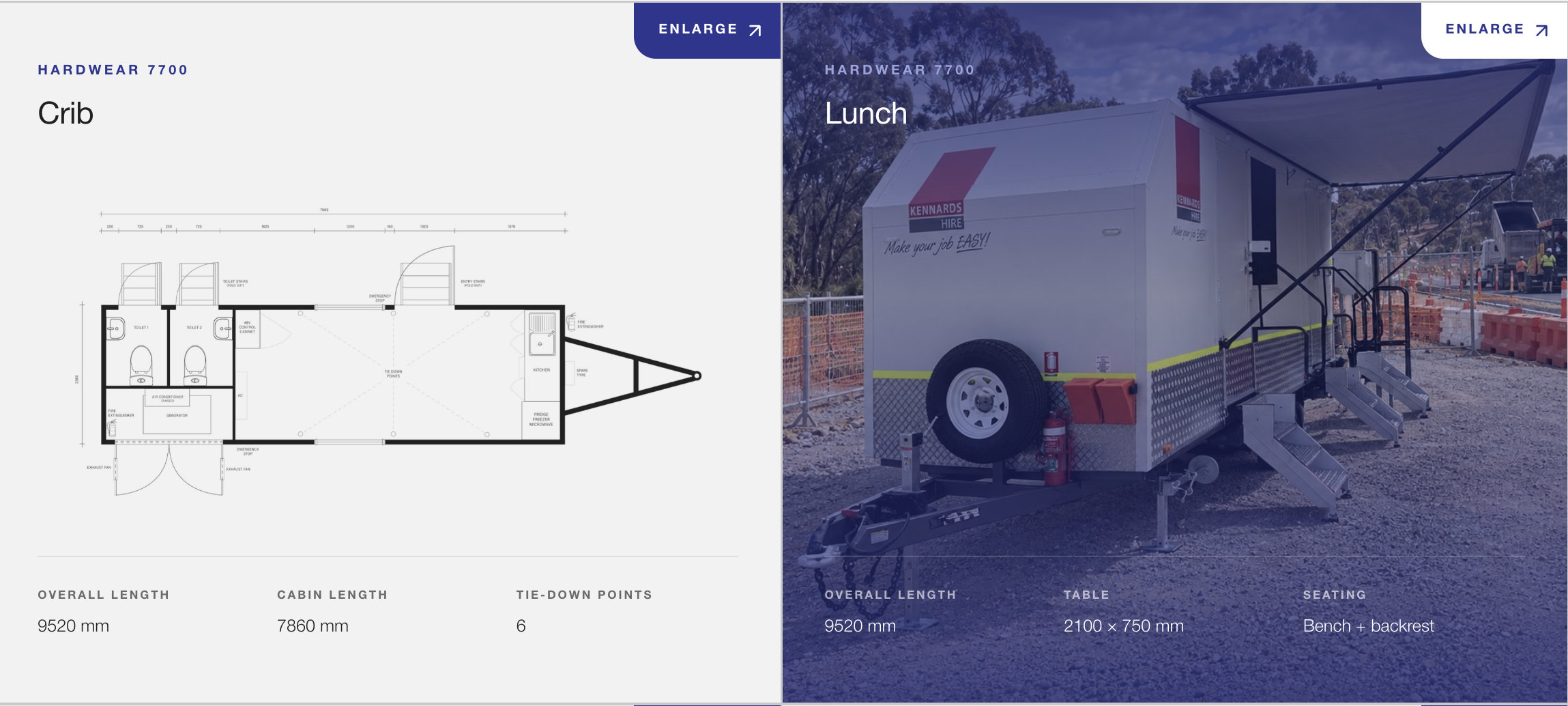
Our six standard layouts across the 7.7m and 9.0m range are now available to explore online, with floorplans, specifications and key inclusions for each configuration.
Six layouts. Built for different jobs.
No two sites operate exactly the same way.
Across our 7.7m and 9.0m range, the six standard Hardwear layouts provide different combinations of workspace, amenities and facilities to suit different crews and operational requirements.
The updated website makes it easier to see how each layout works and compare the options before deciding what’s right for your operation.
See what goes into them.
We’ve also opened up more of what sits behind every Hardwear van.
From solar, 48V battery power and generator backup through to water, waste, climate control, amenities and the equipment that supports everyday operation, you can see more of the complete system - not just the space inside it.
Transparency matters.
These are serious pieces of equipment, built to work in demanding environments.
We think customers should be able to understand what they’re investing in: how it’s built, what’s included and the systems that keep it working once it reaches site.
Every Hardwear van is manufactured in Australia and built to the same Hardwear standard, regardless of the layout you choose.
We know what goes into every Hardwear van. We think you should too.
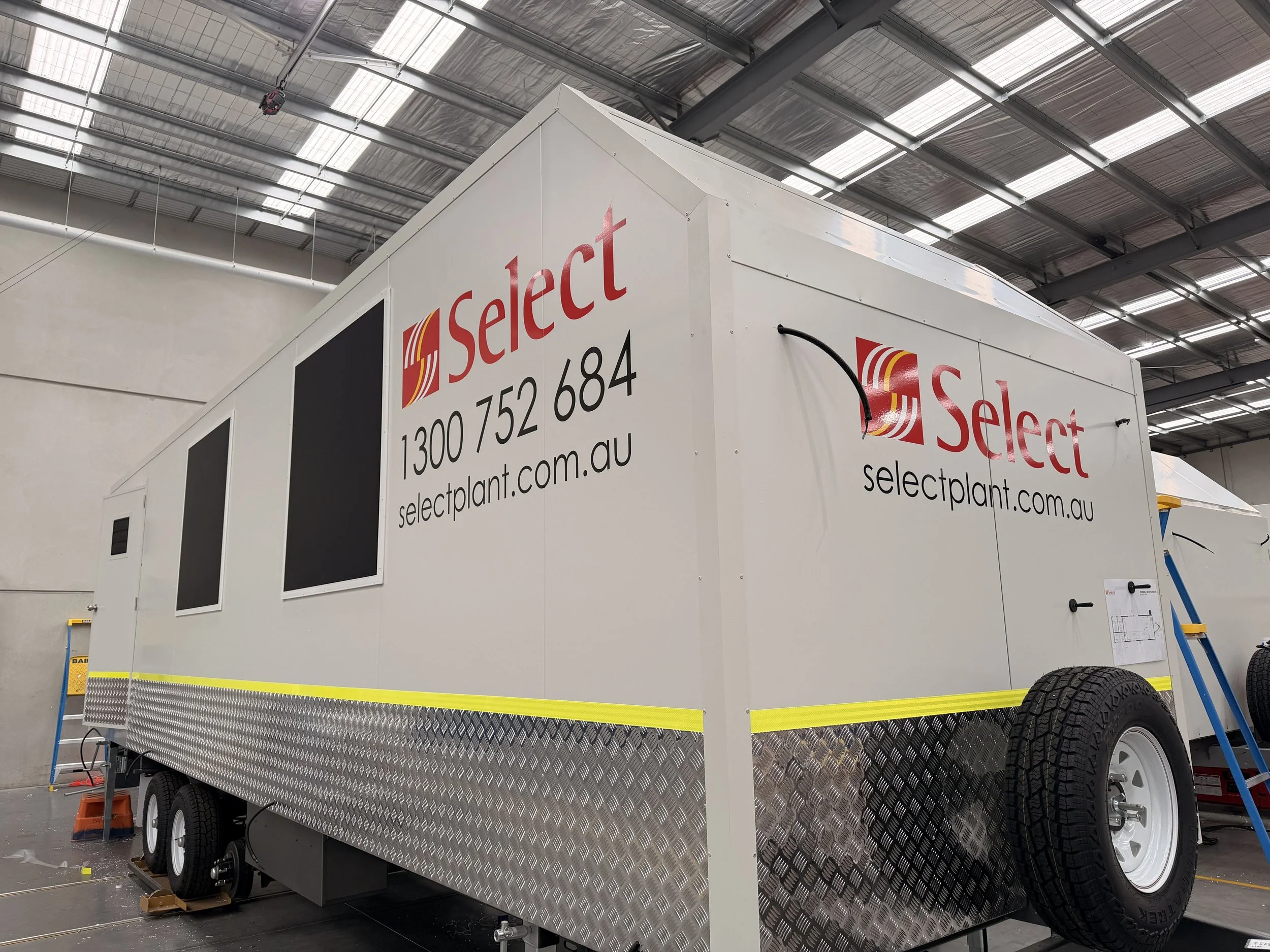
9 Metres of Brand Presence
There’s a point in every build where the van stops looking like a Hardwear van in production and starts looking like it belongs to the customer.
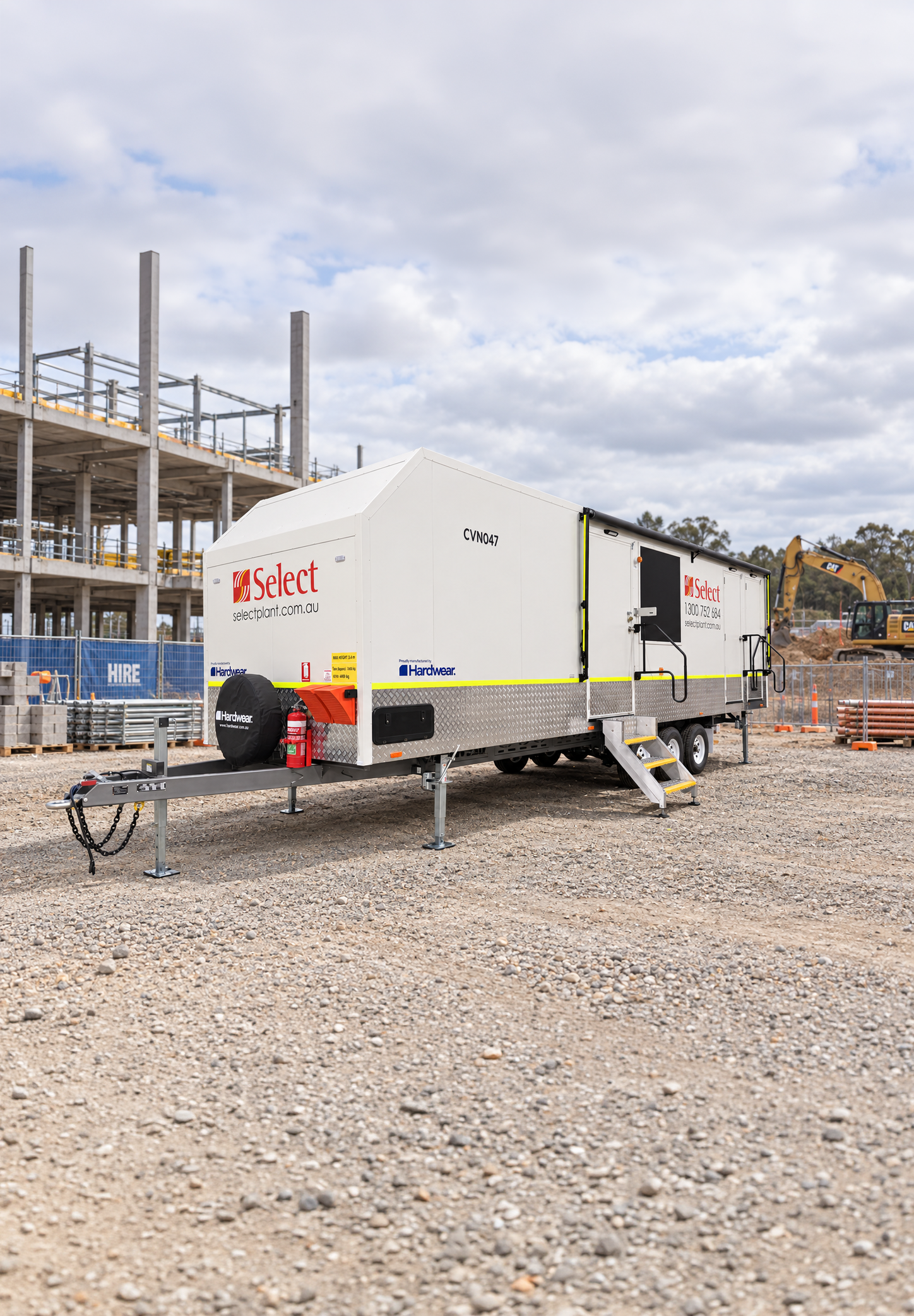
For this latest Select van, that moment came when the signage went on.
The HW9000 gives customers a substantial amount of clean exterior space to work with, and on a 9-metre van that creates real visual impact once the branding is applied.
It’s one of our favourite parts of the build process.
Until that point, the focus is on fabrication, systems, fit-out, testing and finishing. Then the graphics are installed and the whole van changes.
The branding gives the van its final identity.
For companies operating across construction, infrastructure, hire and remote worksites, that exterior space also creates a strong opportunity for visibility. A Hardwear van can spend its working life on site, on the road and moving between projects, putting the customer’s brand in front of people well beyond the factory gates.
And when you have nine metres to work with, there’s plenty of room to make that branding count.
This latest Select Plant Australia build is a great example - clean, bold and unmistakably theirs.
We never get tired of seeing the final reveal.
Hardwear. Built with purpose.
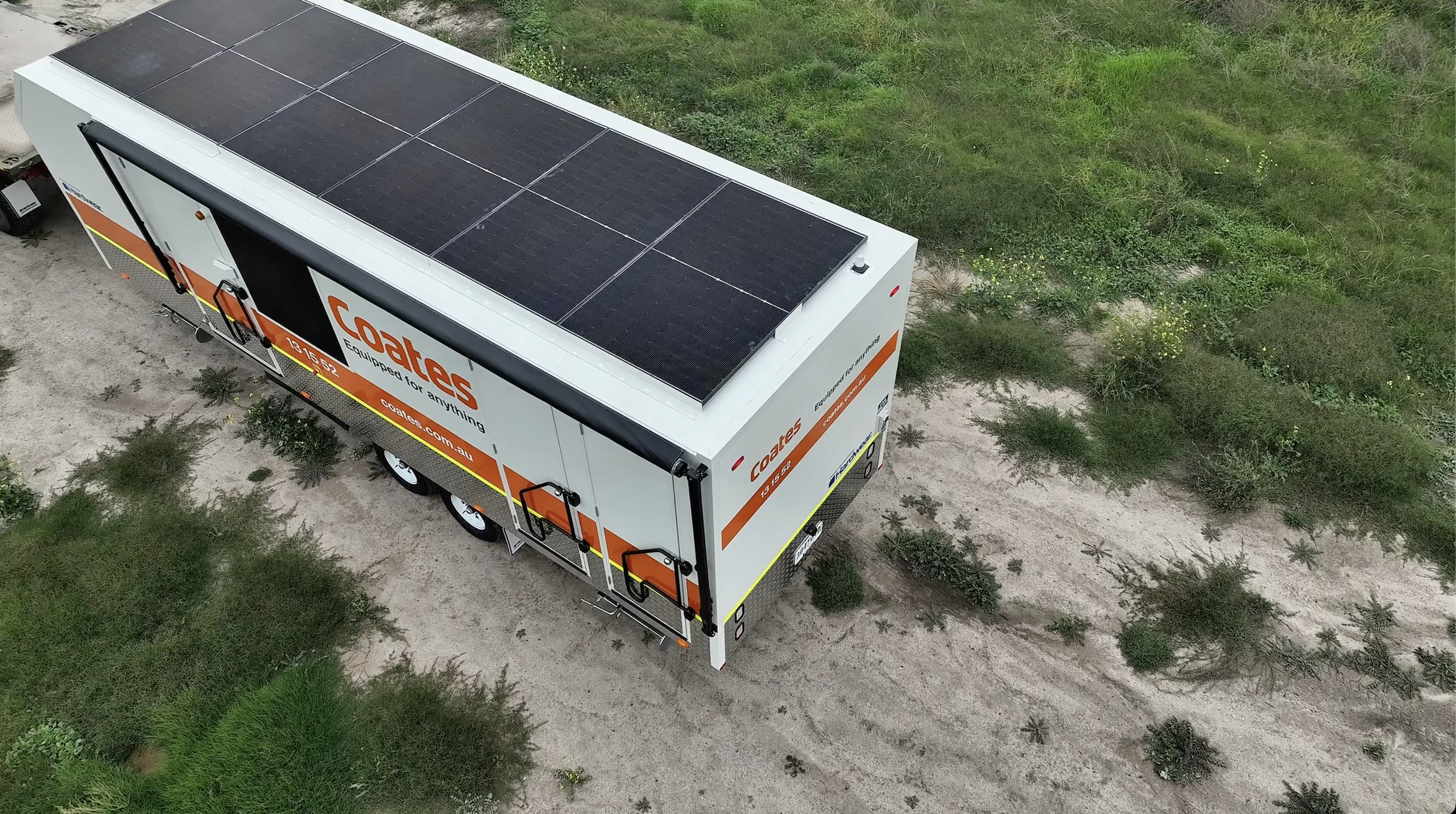
Cloud overhead? Solar still contributing. Battery still charging.
Cloud overhead? Solar still contributing. Battery still charging.
It might not look like a perfect solar day, but available daylight is still there.
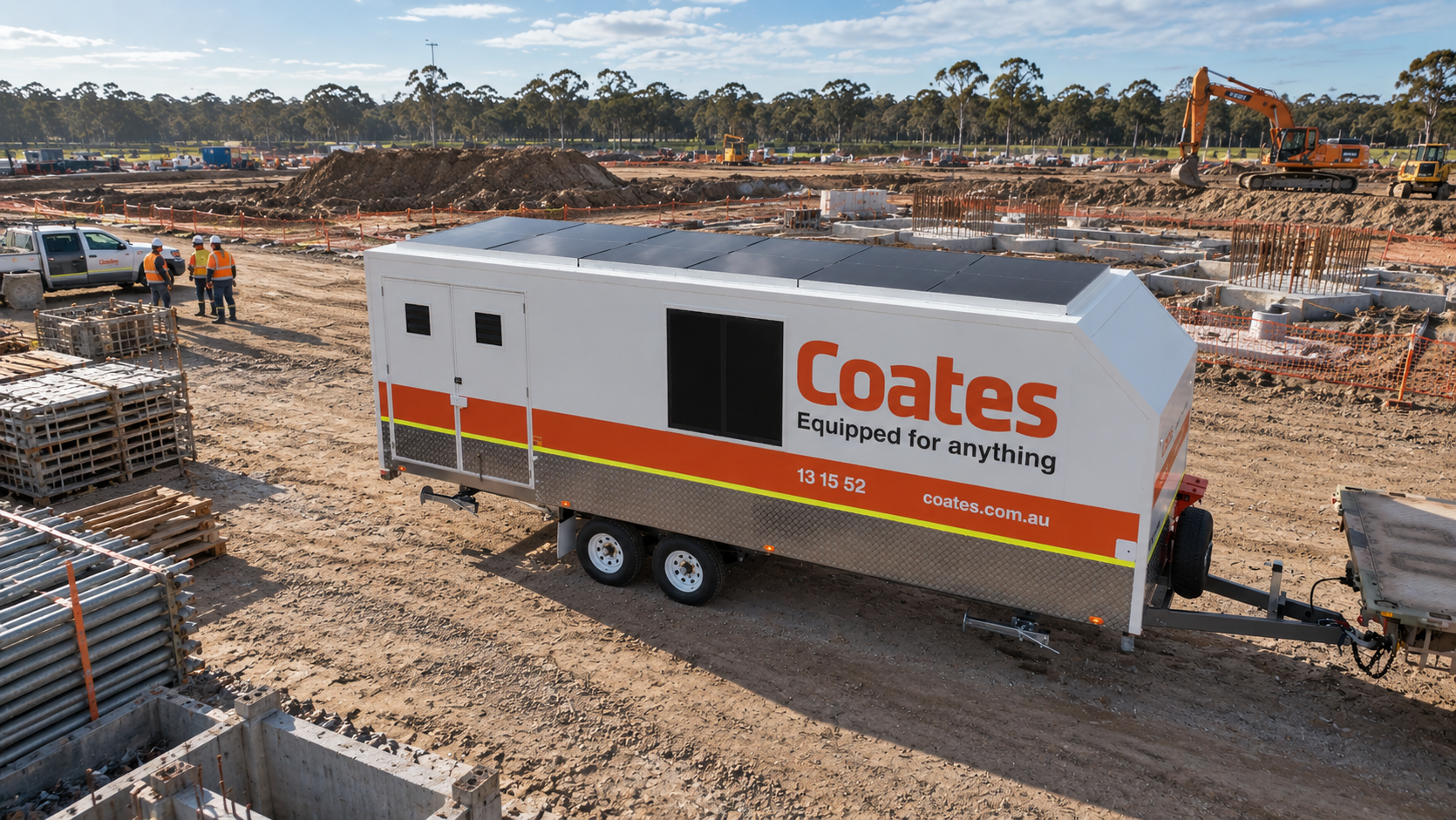
Even under heavy cloud cover, diffuse daylight can pass through the clouds and reach the solar panels on a Hardwear van, allowing them to continue contributing energy to the van’s 48V battery system.
And this latest van for Coates is doing exactly that.
The important point is that a Hardwear van isn’t relying on one power source alone.
Solar generation, 48V battery storage and onboard generator support all form part of the complete power system.
When daylight is available, the solar panels continue harvesting that energy and feeding the battery system. Stored power then helps support the van throughout the day, while the onboard generator is there when additional power is required.
The amount of solar generation will naturally change with the conditions, but cloud cover doesn’t mean the contribution disappears.
It’s about making use of the energy available and having the complete system there to manage changing conditions on site.
Solar generation. Battery storage. Generator support.
Working together as intended.
Because daylight doesn’t disappear when the clouds roll in.
Hardwear. Built with purpose.
Built for More Than Blue Skies
It’s been a long, cold and particularly grey winter across much of the country.
And while that might not be the weather most people immediately associate with solar power, it’s exactly the kind of real-world condition a Hardwear van needs to be designed for.
Winter naturally presents some challenges for solar generation. Shorter daylight hours, a lower sun angle and heavier cloud cover can all reduce the amount of solar energy available throughout the day.
But cloudy doesn’t mean powering off.
Solar panels generate electricity from available light, not only direct sunshine. Even under overcast conditions, diffused daylight can still reach the panels and continue contributing energy to the van’s 48V battery system.
That’s important - but solar is only one part of the Hardwear power setup.
A Complete Power System
Hardwear vans are designed around an integrated system combining solar generation, substantial battery storage and onboard generator support.
Each component has a role to play.
The solar array captures available daylight and contributes power throughout the day. The 48V battery system stores and manages that energy, helping provide continuity as conditions and power requirements change. When additional power is required, the onboard generator is there to support the system.
Rather than relying on one power source alone, the three components work together.
Solar generation. Battery storage. Generator support.
It creates a smarter, more resilient power setup designed around the realities of operating on site.
Designed for Changing Conditions
Site conditions are rarely perfect.
Weather changes. Power demand changes. Projects operate across different climates, locations and seasons.
That’s why the value of the Hardwear power system isn’t simply the solar panels on the roof, the batteries underneath or the generator onboard.
It’s how the entire system works together.
Because worksites don’t only operate when the weather is perfect.
Neither should the equipment on them.
Hardwear. Built with purpose.
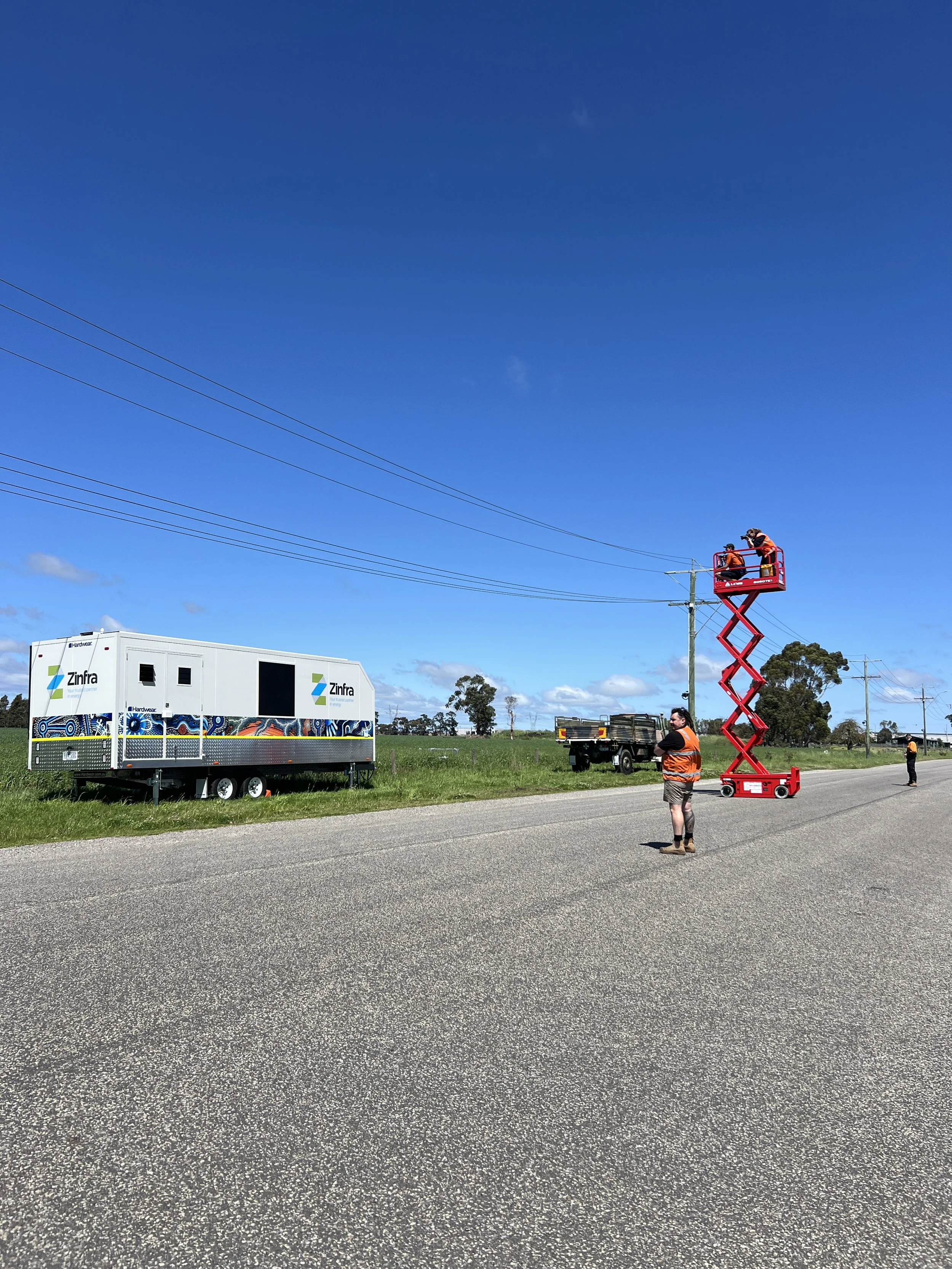
Going the Extra Height to Show What Matters
When one of the hardest-working parts of the van is on the roof, sometimes you have to go up to get the shot.
A little behind the scenes from our recent Zinfra shoot - scissor lifts, cameras, a closed street and all.
At Hardwear, we love showing the details that make our vans what they are, not just the finished exterior.
From the integrated solar system and advanced 48V battery setup to the internal layout, inclusions and finishing details, every part of a Hardwear van has been considered for a reason.
The solar system in particular plays an important role in how the van performs once it reaches site, helping provide reliable power while reducing reliance on the generator.
That’s why we think it deserves to be shown properly.
For us, the details matter. They’re what shape how the van works, how it performs and how it supports the people using it every day.
And if that means getting up on a scissor lift to capture the right angle, so be it.
Built with purpose. Down to the smallest detail.
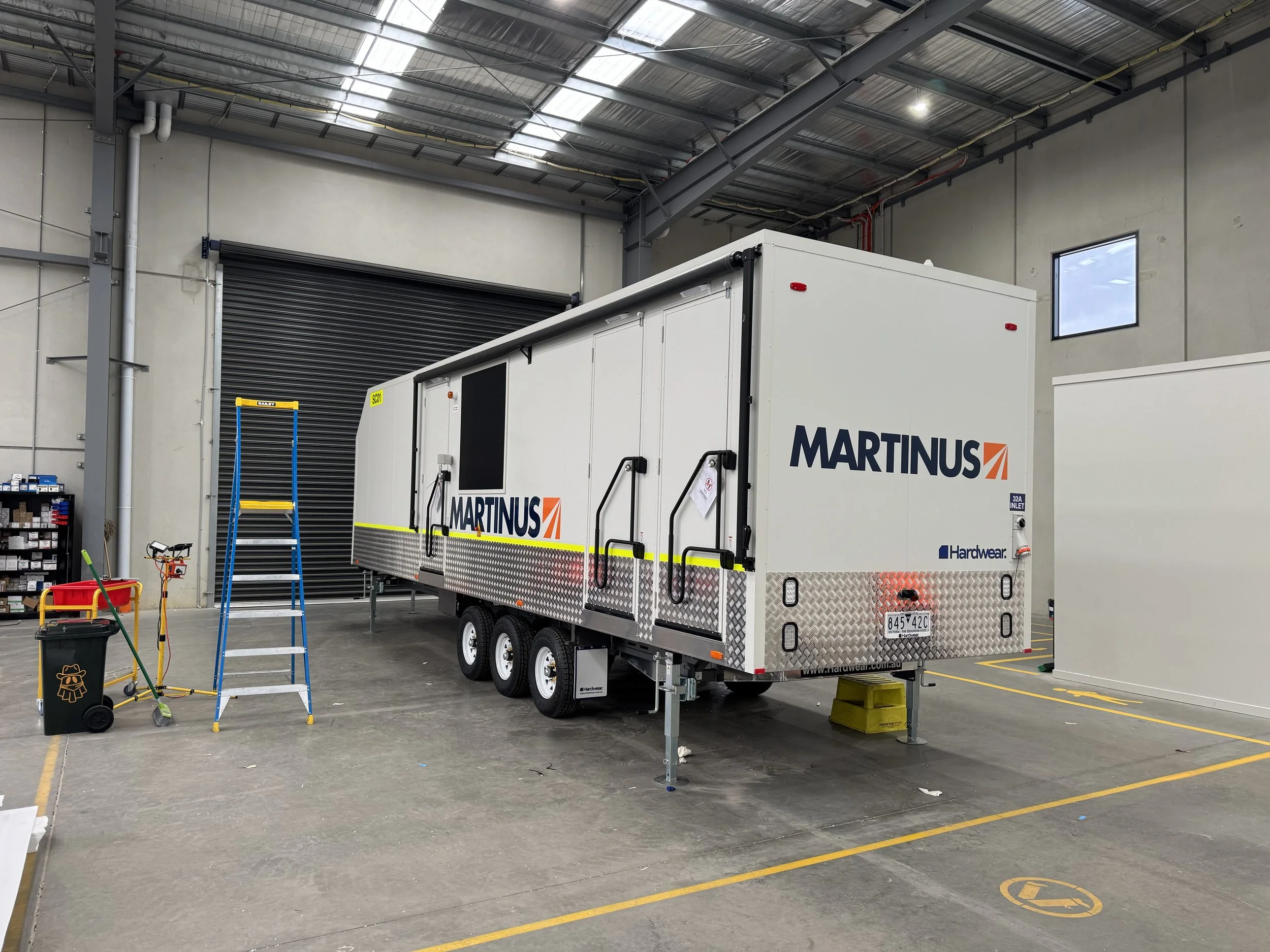
Busy Building What Comes Next
It’s been one of those weeks at Hardwear - and we wouldn’t have it any other way.
The workshop has been flat out, with another round of site vans taking shape before heading to projects across Australia.
We’re fortunate to work with customers who expect more than simply doing things the way they’ve always been done.
Smarter technology. Better inclusions. Purpose-built layouts. Vans designed around the job they actually need to do.
And that’s exactly the kind of work we love.
It keeps us looking at what can be done better, introducing new ideas and continuing to push what a modern site van can deliver.
For us, innovation isn’t about adding features for the sake of it. It’s about making practical improvements that deliver real value on site, whether that means more efficient power systems, better use of space, smarter inclusions or a layout designed specifically around how the van will be used.
Seeing customers come back to Hardwear again and again is something we’re incredibly proud of. Every repeat order is a vote of confidence in what we’re building - and a reason to keep raising the standard.
And to our new customers… welcome. We can’t wait to build what comes next with you.
Busy? Absolutely. And loving every second of it.
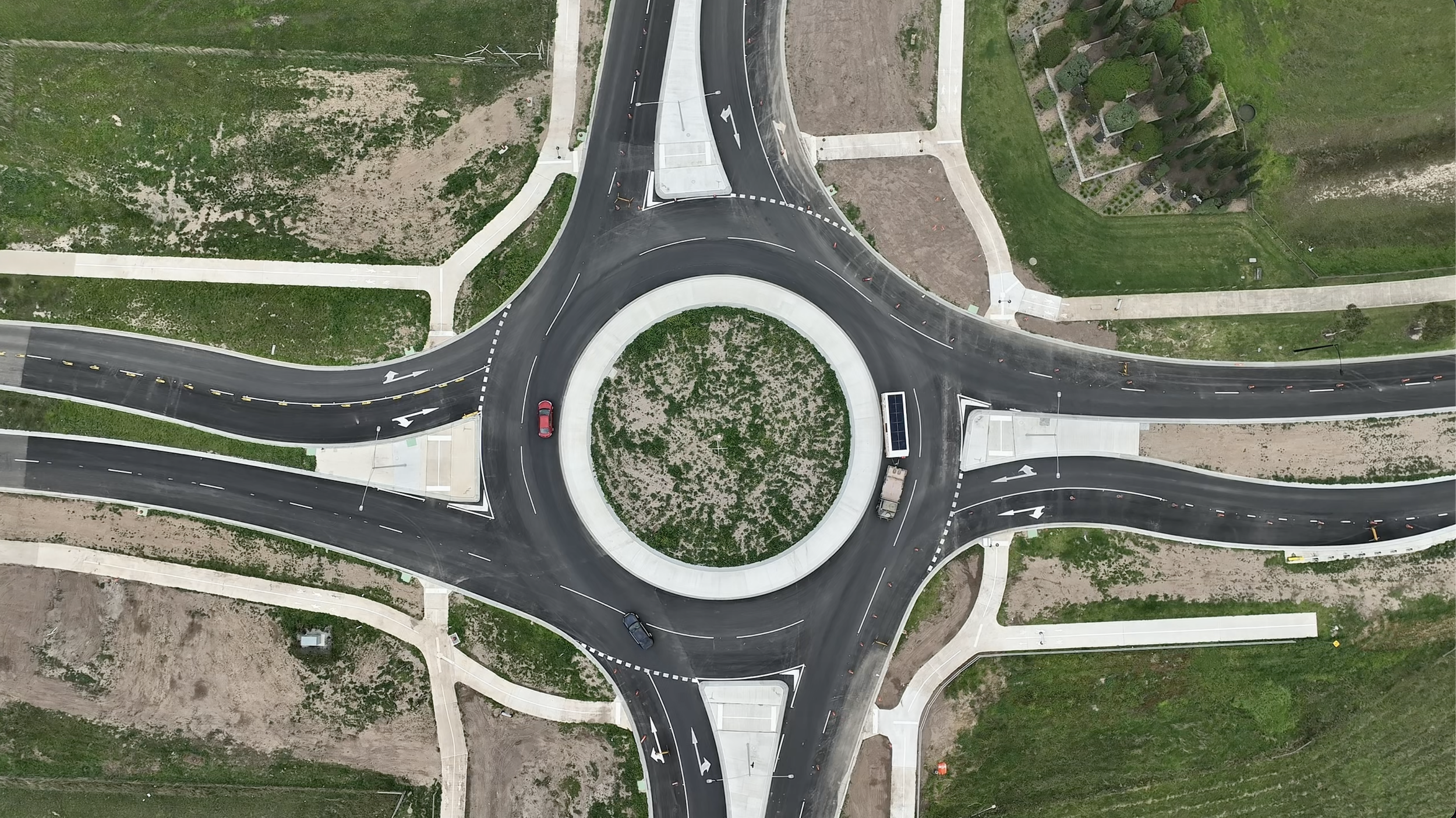
More Than Meets the Eye
From above, it might just look like another site van.
But sitting on the roof is one of the hardest-working parts of every Hardwear build.
Every Hardwear site van is equipped with integrated solar panels working alongside an advanced 48V battery system, designed to deliver reliable, efficient power wherever the job takes it. It's a solution that helps reduce generator reliance, lower operating costs and provide dependable power on worksites across Australia.
In just a few days, this Coates site van will leave our workshop and begin its next chapter - becoming an office, meeting room and lunchroom for the people delivering another Australian project.
That's the part we enjoy most.
Watching something built in our workshop head off to support projects in every corner of the country.
From remote mine sites in Western Australia to the Top End and everywhere in between, Hardwear site vans are helping create practical, reliable workspaces for the people building Australia's future.
We're proud to play a small part in that journey.
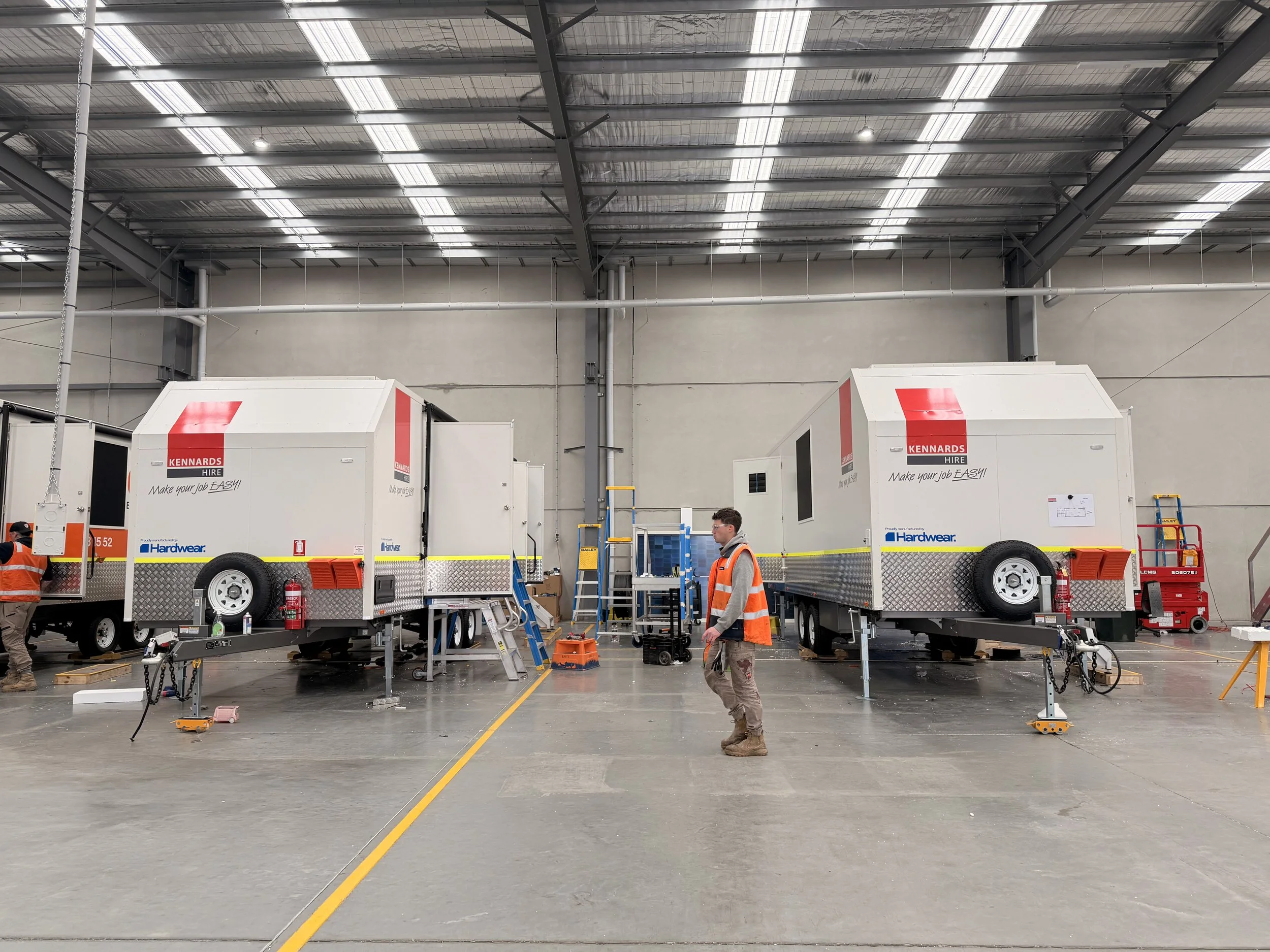
Another Kennards Delivery Taking Shape
Every week, another build moves one step closer to leaving the Hardwear workshop.
This week, it's another two site vans destined for the Kennards fleet.
In just a few days, these vans will become much more than transportable buildings.
They'll become offices where daily plans are mapped out.
Meeting rooms where important decisions are made.
Lunchrooms where crews can take a break and recharge before heading back to work.
And they'll support the people delivering some of Australia's biggest construction, infrastructure and industrial projects.
That's something we never lose sight of.
Every Hardwear van is designed to be practical, reliable and comfortable because we know the people using them rely on them every single day.
We're proud to see another two Hardwear vans getting ready to head out into the field, where they'll begin doing what they were built to do - supporting the people building Australia.
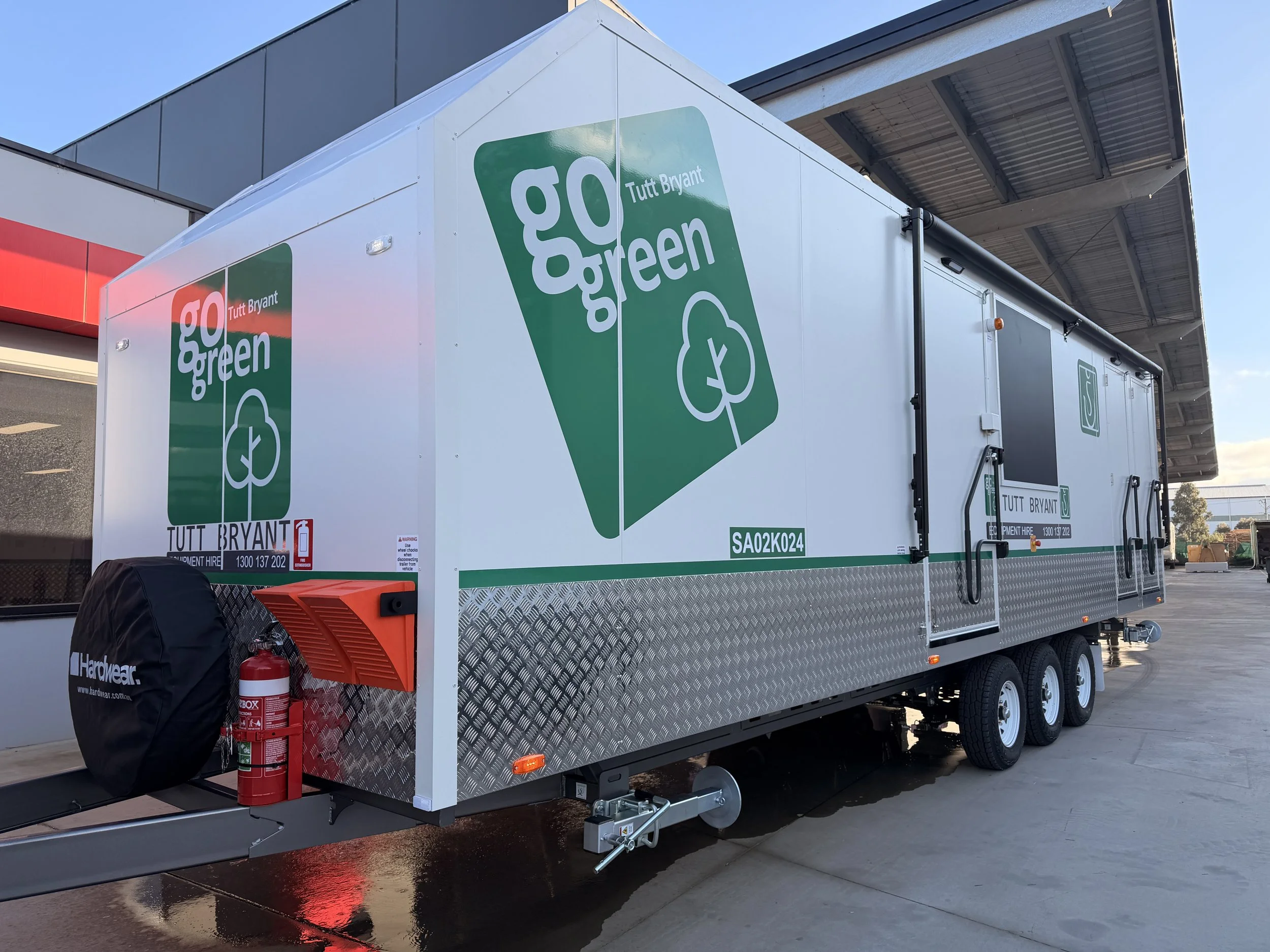
The Greenest Part of This Tutt Bryant Van Isn't What You See - It's How It Operates
At first glance, this custom-built 9-metre site office for Tutt Bryant is an impressive piece of equipment. With its tailored layout, premium fit-out and unmistakable branding, it stands out on any worksite.
But the most important feature isn't visible from the outside.
It's how the van operates.
Built to Support a Lower-Emission Worksite
Every Hardwear site office is designed to reduce reliance on diesel generators, and this van is no exception.
Using Hardwear's intelligent 48V electrical platform, large solar array and lithium battery system, the van is able to power everyday site operations with significantly less generator use than traditional site offices.
That means:
Lower fuel consumption
Reduced carbon emissions
Less noise on site
Lower operating costs
Greater energy independence
These aren't future technologies, they're standard features built into every Hardwear site office.
Supporting Tutt Bryant's Go Green Vision
Tutt Bryant has made sustainability a core focus through its Go Green initiative, introducing lower-emission equipment, renewable fuels, battery energy storage and innovative technologies that help customers reduce their environmental impact.
This custom Hardwear site office aligns perfectly with that philosophy.
Rather than sustainability being something that's added later, it's engineered into the way the van works every day, reducing generator hours, cutting diesel use and delivering a smarter way to power temporary site facilities.
Purpose Built for Australian Projects
Beyond its sustainable operation, this 9-metre van has been customised specifically for Tutt Bryant's operational requirements.
Every Hardwear build is designed around the customer, ensuring the layout, functionality and performance match the demands of the projects it will support.
Because every worksite is different and every site office should be too.
Sustainability That Delivers More Than Environmental Benefits
Reducing emissions is only part of the story.
Lower fuel usage means fewer refuelling trips, reduced operating costs and less downtime, while quieter operation creates a better working environment for site teams.
It's sustainability with practical, measurable benefits.
Building the Next Generation of Site Offices
As Australia's construction and infrastructure industries continue to focus on decarbonisation, smarter mobile infrastructure has an increasingly important role to play.
This Tutt Bryant site office is another example of how Hardwear is helping lead that transition… not by changing how a van looks, but by fundamentally changing how it performs.
The greenest part of this van isn't the graphics. It isn't the paint.
It's everything happening inside.
What really sets an onsite van apart?
Walk through a hire yard or construction site and you'll probably notice something.
Most onsite vans look pretty similar.
From the outside you'll see white composite panels, solar panels on the roof, an awning and a generator. At first glance, it can be difficult to tell the difference.
The biggest differences, however, aren't visible.
They're found in the engineering behind the electrical system, the way the roof has been designed to maximise solar performance, the layout that helps crews work more efficiently and the quality of the build that stands up to years on Australian worksites.
Those outcomes don't happen by accident.
They're the result of hundreds of decisions made by the people behind every Hardwear build. Our engineers, tradespeople and apprentices bring their experience and craftsmanship to every project, continually refining the way we design and manufacture our onsite facilities.
Many of those decisions will never be noticed by someone walking past a finished van.
But they will be noticed by the people who rely on it every day.
At Hardwear, we don't build vans to impress in the showroom.
We build them to perform where they matter most—on site.
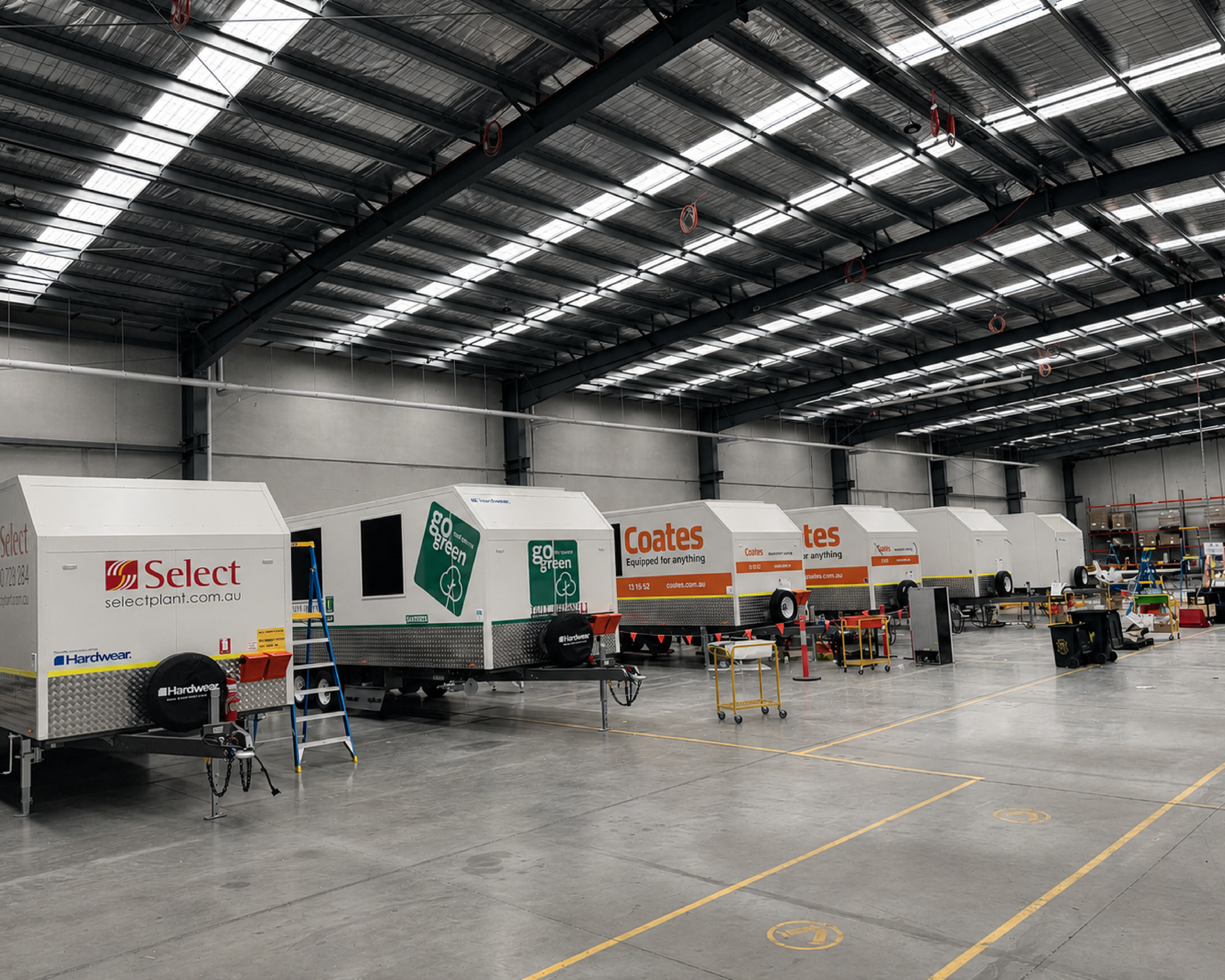
No two Hardwear vans are exactly the same.
Last week, another diverse lineup rolled out of our Victorian factory, heading to customers across a range of industries and locations throughout Australia.
From hire fleets and infrastructure projects to remote worksites and civil construction, each van was configured to suit the customer's specific operational requirements. Different layouts, different equipment and different finishing touches - but all built with the same commitment to quality, durability and performance.
Every project is different, and that's exactly how we approach every build. Whether it's additional workspace, custom storage, integrated power systems or site-specific requirements, every Hardwear van is built to suit the job it's going to do.
Seeing a lineup like this head out the door is always a great reminder of the variety of customers we work with and the trust they place in our team.
Different customers. Different jobs. Built the Hardwear way.
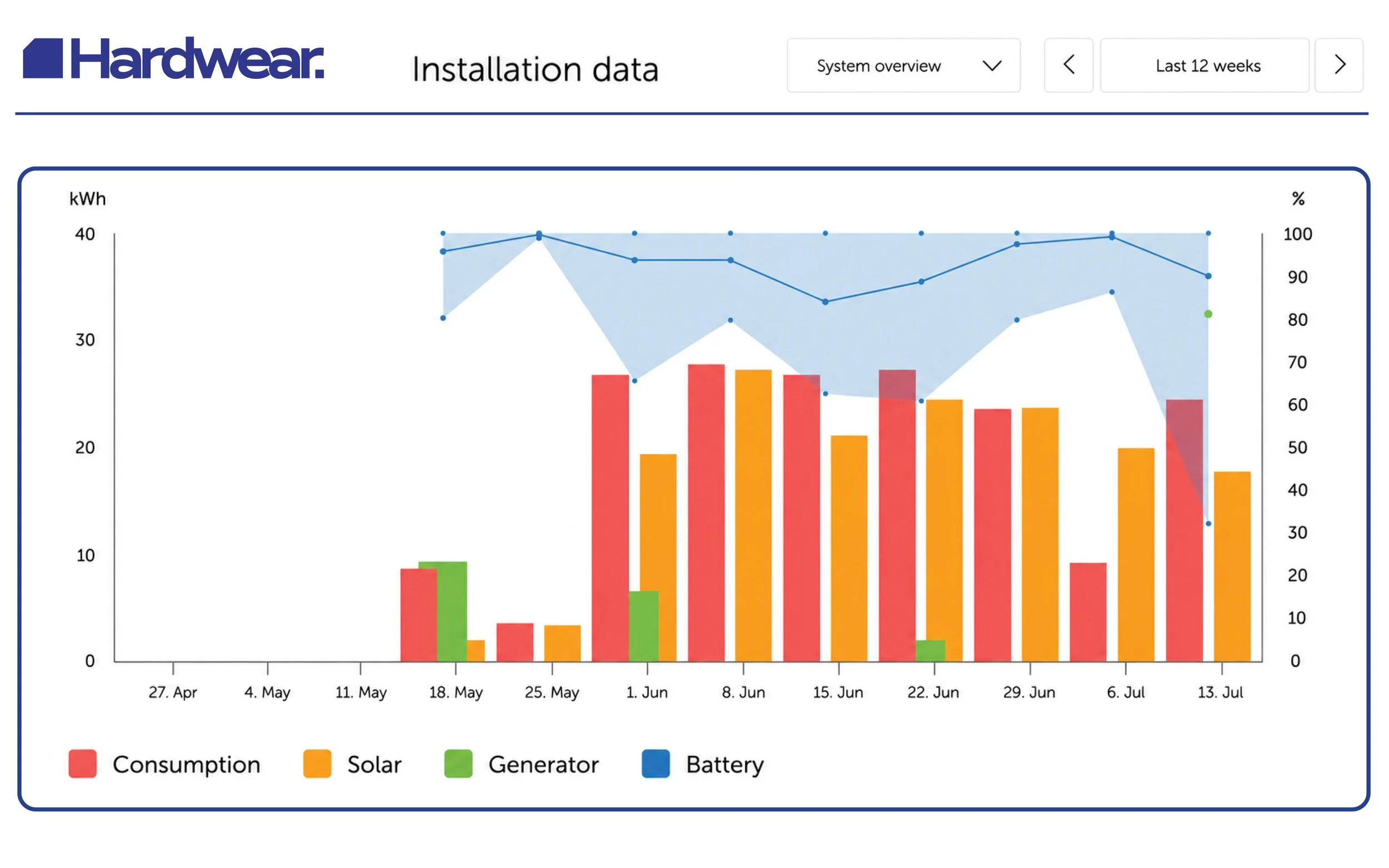
The Difference Between Talking About Performance and Proving It
Anyone can talk about solar and battery systems. At Hardwear, we'd rather show how ours perform.
The data we're sharing comes directly from one of our onsite vans operating on a real Australian worksite over a 12-week period. It isn't a laboratory test or a marketing estimate. It's live operating data showing exactly how our integrated 48V solar and battery system performs in day-to-day conditions.
Built to reduce generator reliance
One of the biggest advantages of an integrated solar and battery system is reducing the amount of time a generator needs to run.
Less generator runtime means:
Lower fuel consumption
Reduced servicing and maintenance
Quieter worksites
Lower operating costs
Reliable power throughout the working day
It's a practical improvement that benefits both hire companies and the crews working onsite.
Designed as a complete system
At Hardwear, we don't simply install solar panels on the roof.
Every van is engineered as a complete power system from the ground up. The roof layout is designed to maximise solar performance, the battery storage is sized to suit real operating conditions, and the electrical system is built to manage power efficiently across the entire van.
Every component works together because that's how it was designed from the start.
Why transparency matters
There's plenty of discussion about solar, batteries and off-grid capability.
We think the best way to demonstrate performance is to share real data.
Our customers deserve to know how their onsite facilities perform in the environments they were built for. That's why we'll continue to share real-world results from Hardwear vans operating across Australia.
Because at the end of the day, performance isn't measured by specifications on a brochure.
It's measured on site.
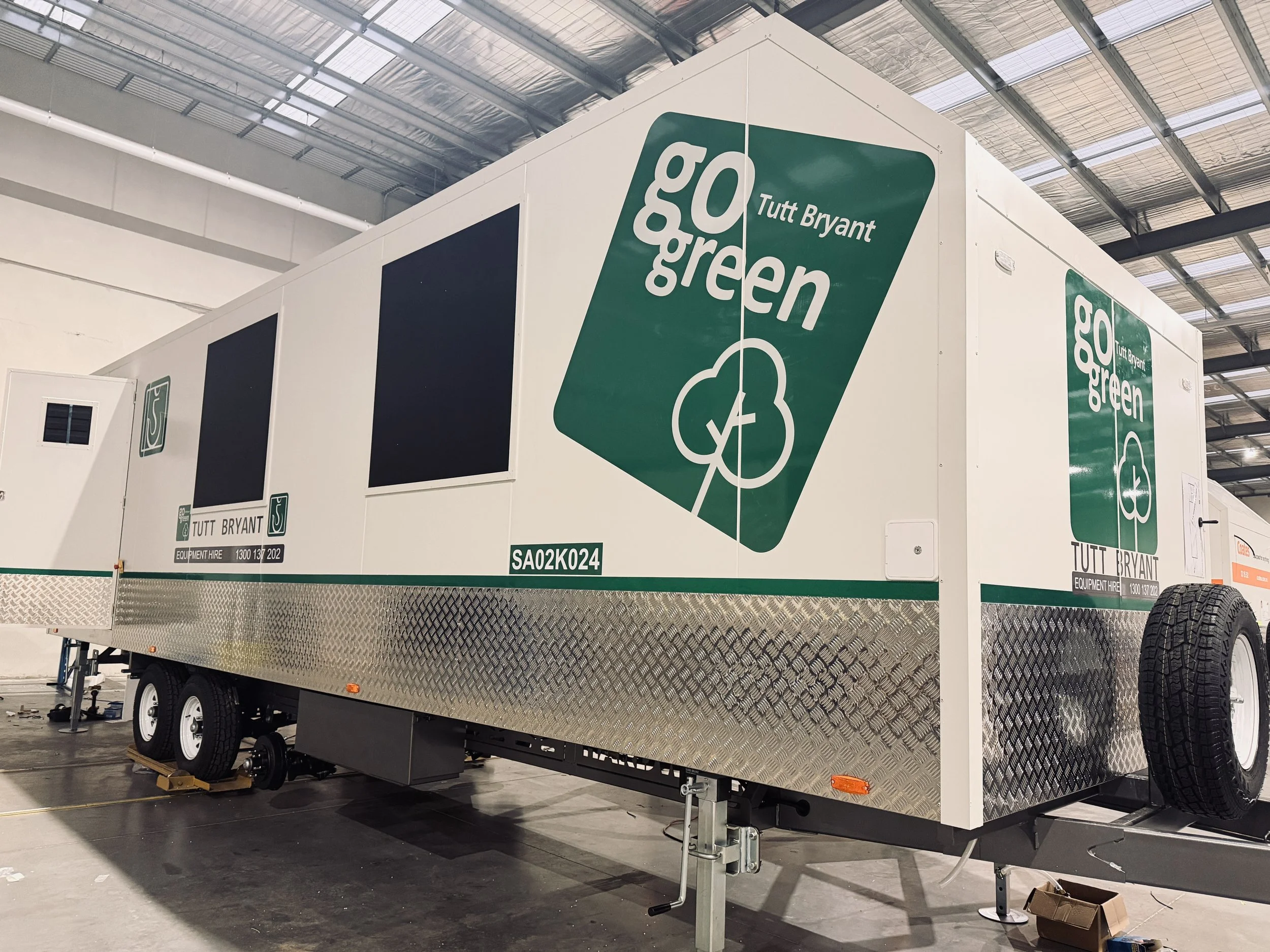
Supporting Tutt Bryant’s Go Green Initiative
It’s always a proud moment seeing another Hardwear van leave the factory, especially when it’s joining the fleet of an industry leader like Tutt Bryant Hire.
This 9m onsite van has been built to support Tutt Bryant Hire’s Go Green initiative, bringing together practical site facilities, smarter power systems and reliable connectivity for demanding worksites.
Built for more efficient site operations
Modern worksites need facilities that can do more while relying less on traditional power sources.
That’s why this van features an integrated 48V solar and battery system designed to help reduce generator runtime and support more efficient day-to-day operations.
It’s a practical approach to improving how power is generated and used onsite, without compromising the reliability crews need.
Ready for remote locations
For projects operating outside major centres, reliable connectivity can be just as important as reliable power.
This van is Starlink-ready, helping teams stay connected in remote locations where conventional internet access may be limited.
Combined with a practical internal layout and durable construction, it provides a complete onsite facility designed to support crews from day one.
A strong fit for Go Green
Tutt Bryant Hire’s Go Green initiative reflects a broader commitment to smarter, more sustainable hire solutions.
Hardwear vans are a natural fit for that approach, helping reduce generator reliance while providing the power, connectivity and functionality required on modern Australian worksites.
We’re proud to build vans that help our customers deliver on initiatives like Go Green and continue improving the way onsite facilities operate.
Built tough for Australian worksites.
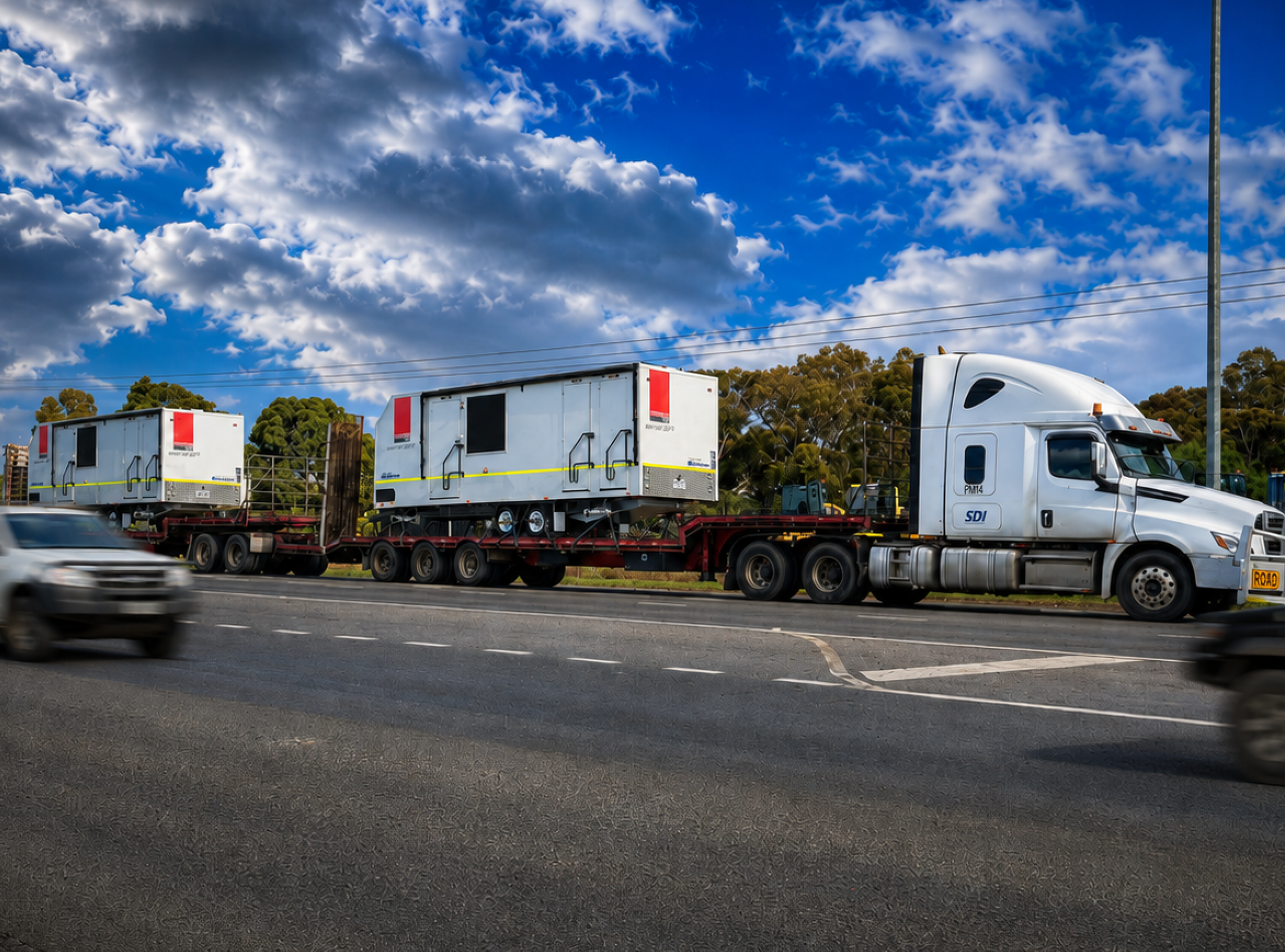
From Factory to Freeway
There’s always something satisfying about seeing a finished Hardwear van leave the factory.
After fabrication, fit-out, electrical work, solar installation and final checks, the next stage is getting the van where it needs to go.
For some projects, our own Hardwear delivery team takes the van directly to site. For others, the vans are loaded onto trucks and transported across the country.
The latest Kennards Hire vans are a great example, with two units now heading west to support worksites in Port Hedland and Karratha.
Built in Victoria. Delivered across Australia.
Every Hardwear van is manufactured in Victoria and built for the demands of Australian worksites.
From metropolitan construction sites to remote mining, civil and infrastructure projects, our vans are designed to arrive ready for work.
That means practical internal layouts, durable finishes, quality fit-outs, integrated 48V solar and battery systems and Starlink-ready connectivity to help support reliable internet access in remote locations.
Ready for the road
Getting a van to site is an important part of the process.
Some units are delivered directly by the Hardwear team, while others are transported by road to locations across Australia.
However they travel, the goal remains the same: delivering reliable, practical onsite facilities that are ready to perform when they arrive.
Supporting worksites nationwide
Seeing Hardwear-built vans heading out to places like Port Hedland and Karratha is a reminder of the industries we support and the environments our products are built for.
Remote worksites need more than a basic facility. They need reliable power, practical space and connectivity that helps teams stay operational wherever the project is located.
From factory floor to freeway, and from delivery to day-one site use, every Hardwear van is built with purpose.
Built tough for Australian worksites.
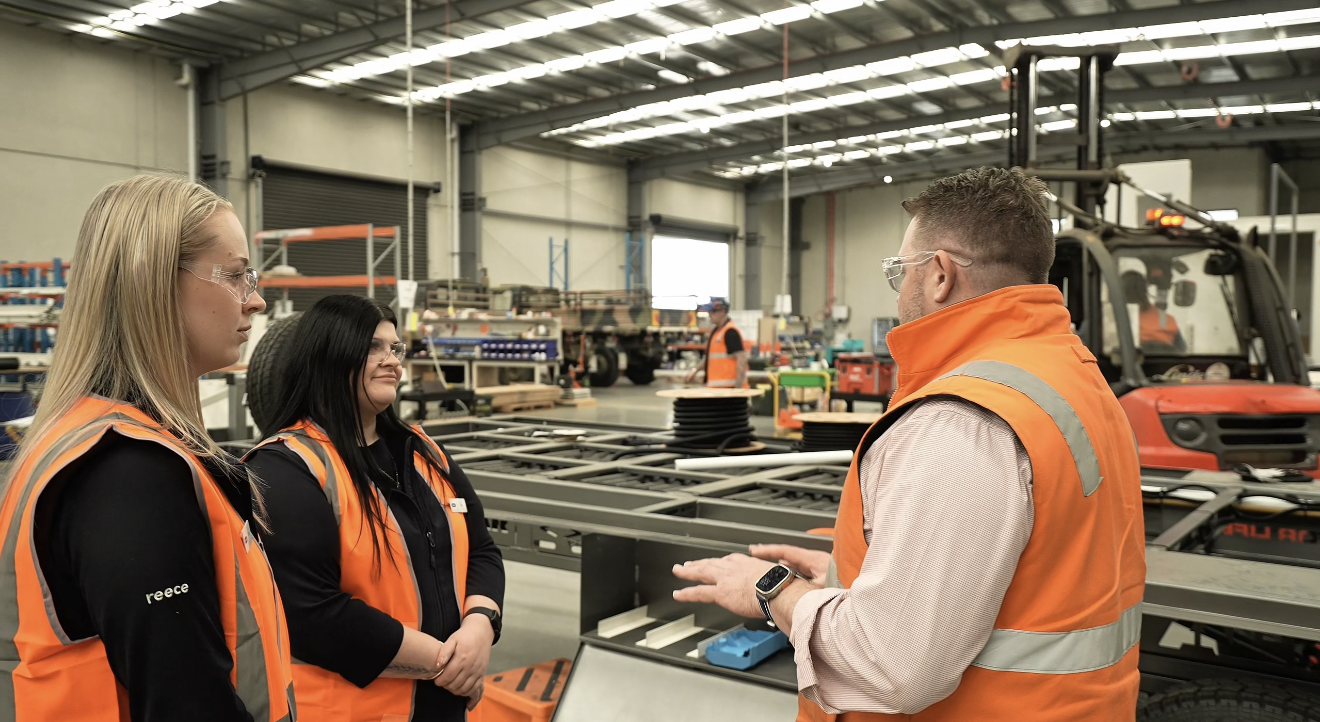
Built on Feedback. Refined for the Field.
The best onsite vans don't come from guesswork.
They come from listening.
At Hardwear, we work closely with leading hire companies, contractors and infrastructure providers to understand what actually happens onsite.
What gets used. What gets damaged. What slows crews down. What makes life easier for the people working in and around these facilities every day.
That feedback plays a critical role in how we design, build and refine our onsite vans.
Designed Around Real Site Experience
Every worksite operates differently, but the demands are often the same.
Facilities need to be practical, reliable, durable and easy to use. They need to support teams from day one and perform in tough Australian conditions.
By working closely with the people who rely on our vans every day, we can better understand where improvements matter most.
That might mean refining an internal layout, improving storage, strengthening high-use areas, adjusting roof layouts for better solar capacity or designing systems that are easier to maintain in the field.
Always Improving
At Hardwear, we don't believe in building the same van over and over again without question.
Every project is an opportunity to improve.
From integrated 48V solar and battery systems to practical fit-outs, durable finishes and roof designs that maximise usable solar space, every improvement is driven by real site experience.
It's this ongoing feedback loop that helps us continue to build smarter, stronger and more capable onsite facilities.
Built for the Way Worksites Actually Operate
An onsite van isn't just a product.
It's a working space for real people on real projects.
That's why we keep listening, refining and improving.
Because the best facilities are the ones built for how worksites actually operate — not how they look on paper.
Built tough for Australian worksites.
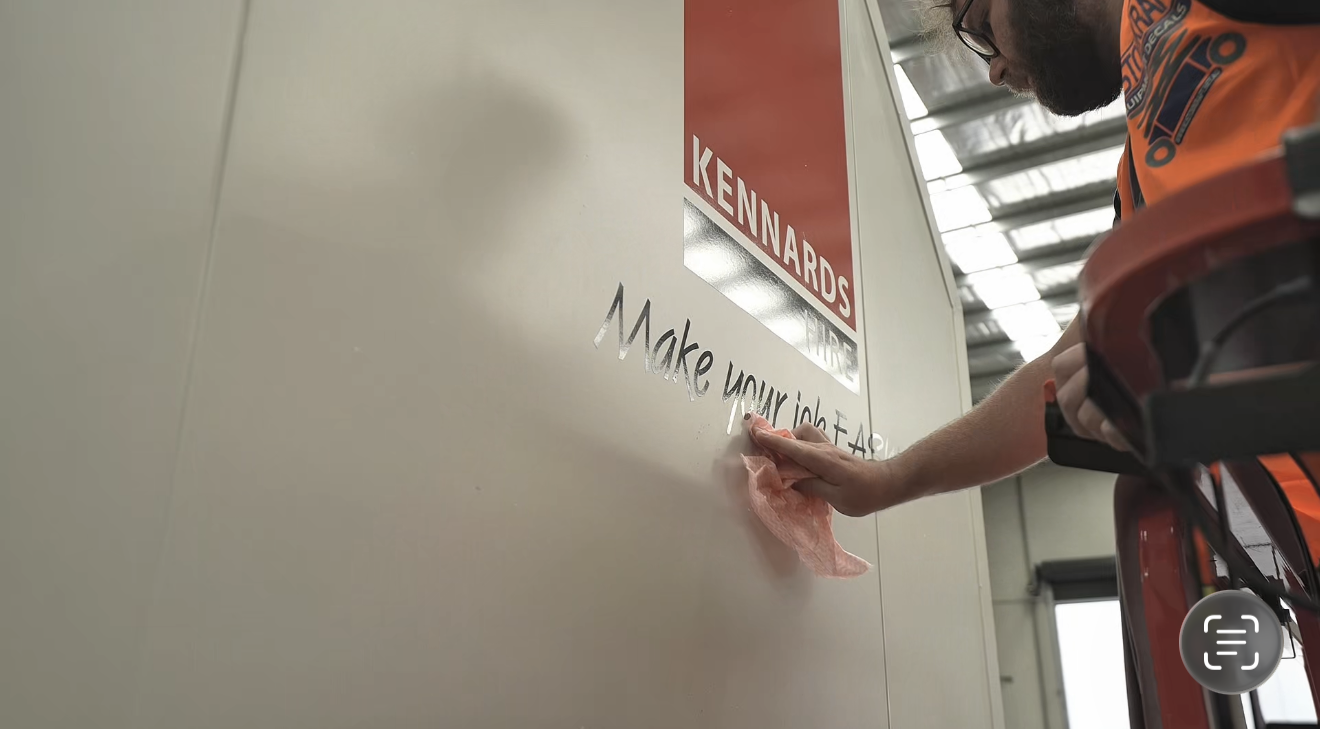
The Final Touches Matter
One of the most rewarding parts of any build is seeing the final branding applied.
It's the moment when all of the individual components come together and the finished product is ready to head out into the field.
While the signage is one of the most visible features, it's supported by everything underneath it - quality fabrication, practical layouts, integrated electrical systems and thoughtful design.
Every Hardwear onsite van is built with a clear purpose: to provide reliable, durable facilities that perform in demanding Australian conditions.
These latest units built for Kennards Hire are no exception.
Featuring integrated 48V solar and battery systems, durable construction and practical layouts, they're designed to support construction, civil, infrastructure and resource projects across the country.
The branding may be the final touch, but it's what sits behind it that makes the difference.
Built tough for Australian worksites.
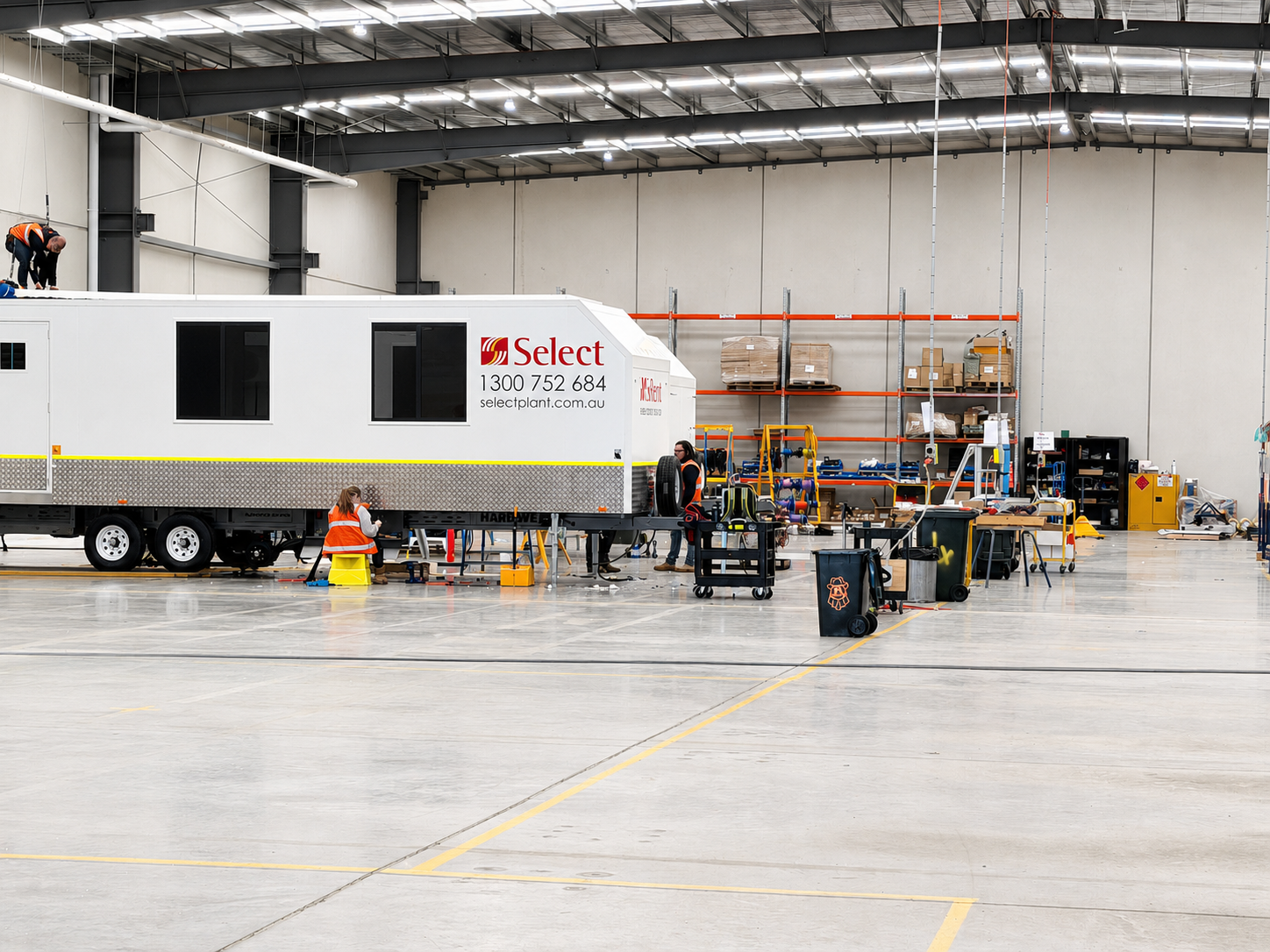
Final Touches Underway on New 9-Metre Vans for Select Plant Australia.
The finish line is in sight for the latest fleet of Hardwear onsite vans being built for Select Hire.
With manufacturing and fit-out nearing completion, our team is now focused on the final details that bring each van together before delivery.
That includes one of the most important stages of the build – installing the integrated solar and battery systems that help power these facilities from day one onsite.
Bigger Vans, Greater Capability
These 9-metre vans have been designed to provide larger, more capable onsite facilities for construction, civil, infrastructure and resource projects.
The additional space creates greater flexibility for site teams, whether the van is being used as a site office, lunchroom, meeting space or workforce facility.
Like every Hardwear build, the focus remains on practical functionality, durability and long-term performance in demanding Australian conditions.
Powering Modern Worksites
As part of the final fit-out process, our team is installing Hardwear's integrated 48V solar and battery systems.
By carefully designing roof layouts to maximise solar capacity, these vans are able to generate more renewable energy onsite while reducing reliance on generators wherever possible.
The result is a smarter, more efficient power solution that supports the growing demands of modern worksites.
Built in Victoria, Delivered Across Australia
Every Hardwear van is manufactured locally by our team in Victoria and built specifically for Australian conditions.
From the chassis through to the final solar panel installation, each stage of the process is completed with a focus on quality, reliability and performance.
It's rewarding to see these projects move from concept through to completion and we're excited to see this latest fleet of vans rolling out for Select Hire in the near future.
Built tough for Australian worksites.